
Non-surgical spinal decompression for disc-related pain
When back or leg pain has been traced to a disc, the question is usually whether anything short of surgery can help. Non-surgical spinal decompression is a computer-controlled traction therapy that gently unloads specific spinal segments. It is one part of a plan, not a stand-alone fix, and it is only started after an examination shows it is suitable.
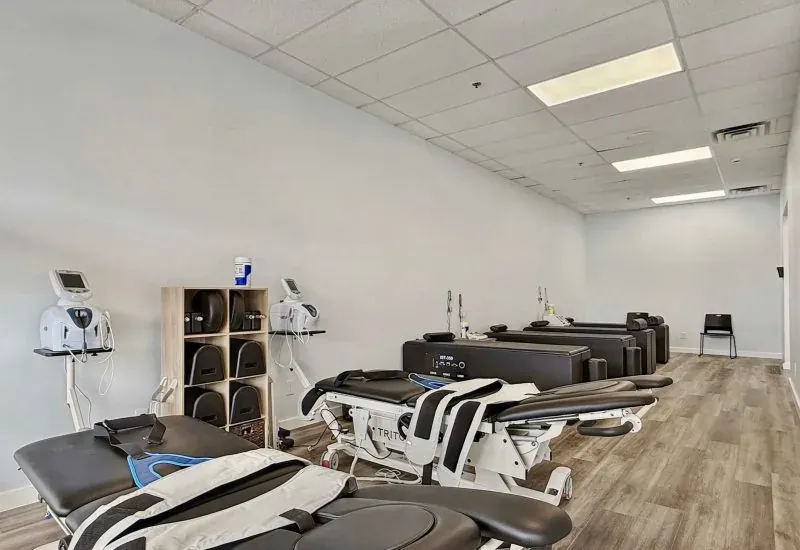
Who this page is for
Adults with disc-related low back or neck pain, including pain that travels into an arm or leg, who want to explore conservative care first.
Why people come in
These are reasons patients give for booking. They are not a diagnosis, and only an examination can tell you what is happening in your case.
- Back pain that worsens with sitting, bending or lifting
- Pain, numbness or tingling that travels into an arm or a leg
- Symptoms that flare after long drives or long days at a desk
- A previous scan showing a bulging or herniated disc
How the evaluation works
We review your history, any previous imaging you bring, and how your symptoms behave through the day. The examination includes movement testing and neurological screening to see whether your presentation fits decompression or points somewhere else.
How we may approach care
During a session you lie on a decompression table while a cycle of traction is applied and released to targeted segments. Most patients describe it as a slow stretch. Decompression is normally combined with adjustments, soft tissue therapy and home exercise, and your provider decides the number and spacing of sessions after the examination.
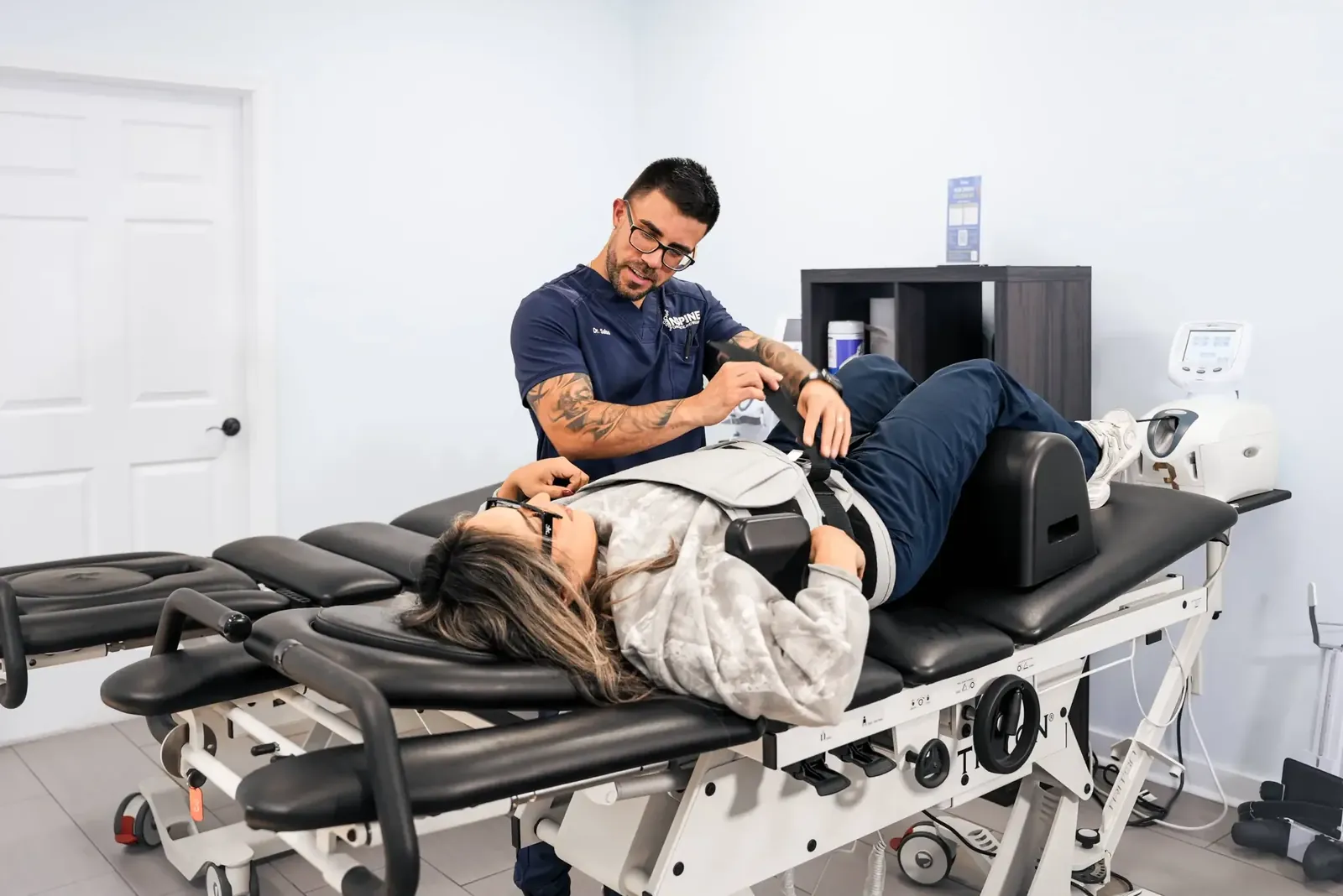
What a first visit may involve
The first appointment is a consultation and examination, not a decompression session. If decompression is recommended, you will be shown the table, told what the sessions feel like and told how progress will be measured before you commit.
Safety and when to seek other care
Decompression is not suitable for everyone. Fracture, certain implants, some surgical histories and some medical conditions rule it out, which is why we examine first. Progressive weakness, loss of bladder or bowel control, or saddle numbness require urgent medical attention. We make no claim that decompression repairs a disc or replaces surgery when surgery is indicated.
Questions patients ask
Is spinal decompression the same as traction?
It uses traction, but delivered through a computer-controlled cycle aimed at specific segments rather than a constant pull.
Will it hurt?
Most patients describe a gradual stretch. Tell your provider immediately if a session is painful so the settings can be adjusted or stopped.
Can I have decompression without an exam?
No. We do not begin decompression before an examination establishes that it is appropriate for you.
Where this care is offered
The clinical explanation above is the same at every clinic. Location links add only what is specific to that clinic.
Clinical review
Clinician review pending. This page has not yet been signed off by a named Inspine provider, and no reviewer is claimed until one confirms it. See our provider profiles.
Take the first step.
Call the clinic nearest you, or send a request and our team will follow up to agree a time.